-
UID: 1569053 
-
- 注册时间2012-06-21
- 最后登录2026-06-22
- 在线时间24136小时
-
- 发帖189680
- 搜Ta的帖子
- 精华2
- 金币701329
- 道行20100
- 原创769
- 奖券545
- 斑龄0
- 道券30
- 获奖0
-
访问TA的空间加好友用道具

UID: 1569053
- 发帖
- 189680
- 金币
- 701329
- 道行
- 20100
- 原创
- 769
- 奖券
- 545
- 斑龄
- 0
- 道券
- 30
- 获奖
- 0
- 座驾
-
- 设备
-
- 摄影级
-
在线时间: 24136(小时)
注册时间: 2012-06-21
最后登录: 2026-06-22
|
—
本帖被 xgch 执行加亮操作(2026-06-22)
—
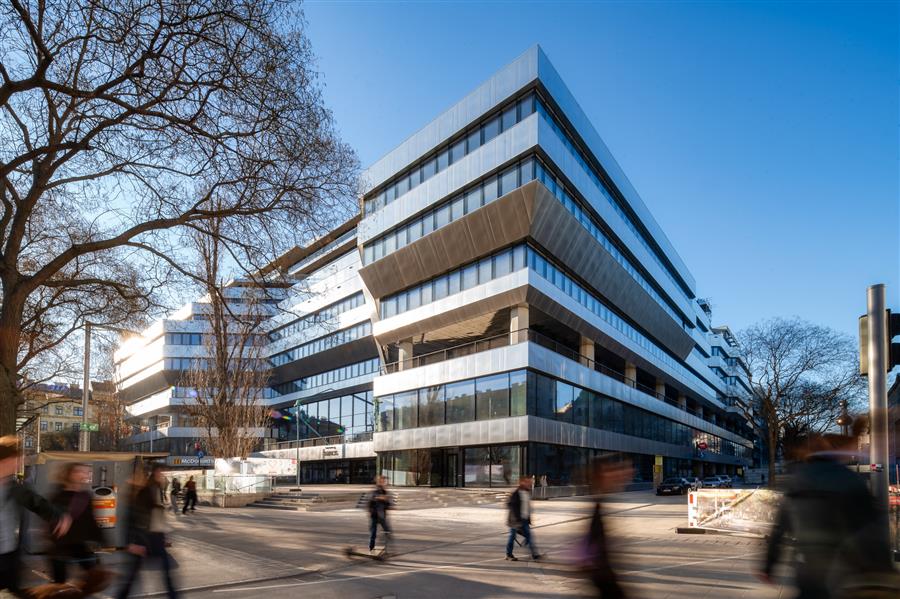
设计单位
Delugan Meissl Associated Architects, Josef Weichenberger Architects
地址
澳大利亚
建筑面积
60000 m²
项目年份
2024
摄影
Christian Pichlkastner, Gebhard Sengmüller
Franz-Josefs-Bahnhof的新生活:Delugan Meissl联合建筑事务所(DMAA)和Josef Weichenberger建筑事务所(JWA)将总站及其上方以Francis命名的办公楼从区域中心的不可逾越的屏障转变为新的Althan区透明可渗透的中心。决定改造的决定性因素,即拆除、重建和增加楼层,是对项目生态平衡的重大影响。这意味着可以节省大量的二氧化碳。
New life at Franz-Josefs-Bahnhof: Delugan Meissl Associated Architects (DMAA) and Josef Weichenberger Architects (JWA) transformed the terminus station and the office building above it under the name Francis from an impassable barrier in the centre of the district into a transparently permeable centerpiece of the new Althan Quartier. The decisive factor in the decision to convert, i.e., to demolish, redevelop, and add stories, was the significant impact on the ecological balance of the project. This meant that considerable amounts of CO2 could be saved.
从一个分裂的社区到随意的透明——弗兰西斯和阿尔森区围绕着弗兰西斯-约瑟夫-巴恩霍夫(弗兰西斯-约瑟夫站),一个新的城市和连接区正在维也纳第九区建立。新的道路在Spittelau和Lichtental地区之间形成了一座桥梁,这两个地区长期被终点站的铁路轨道和以前无法进入的前奥地利银行大楼分开。占地2.4公顷的Althan quarter现在是该地区的中心连接元素。这意味着改造的主要目标之一已经实现:为社区提供更好的居住和生活质量。
From a split neighborhood to casual transparency — With Francis and the Althan Quartier around Franz-Josefs-Bahnhof (Franz-Josef-Station), a new urban and connecting quarter is being established in Vienna's ninth district. New thoroughfares form a bridge between the Spittelau and Lichtental districts, which were long separated by the railway tracks of the terminus station and the previously inaccessible former Bank Austria building. The 2.4-hectare site of the Althan Quartier now serves as a central connecting element in the district. This means that one of the main objectives of the conversion has been achieved: a better quality of stay and life for the neighborhood.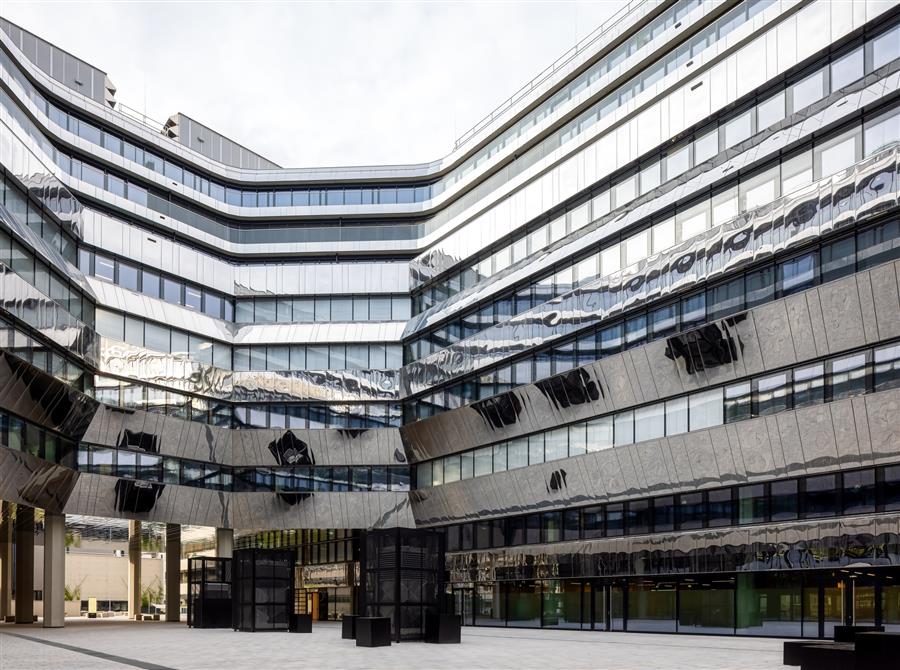 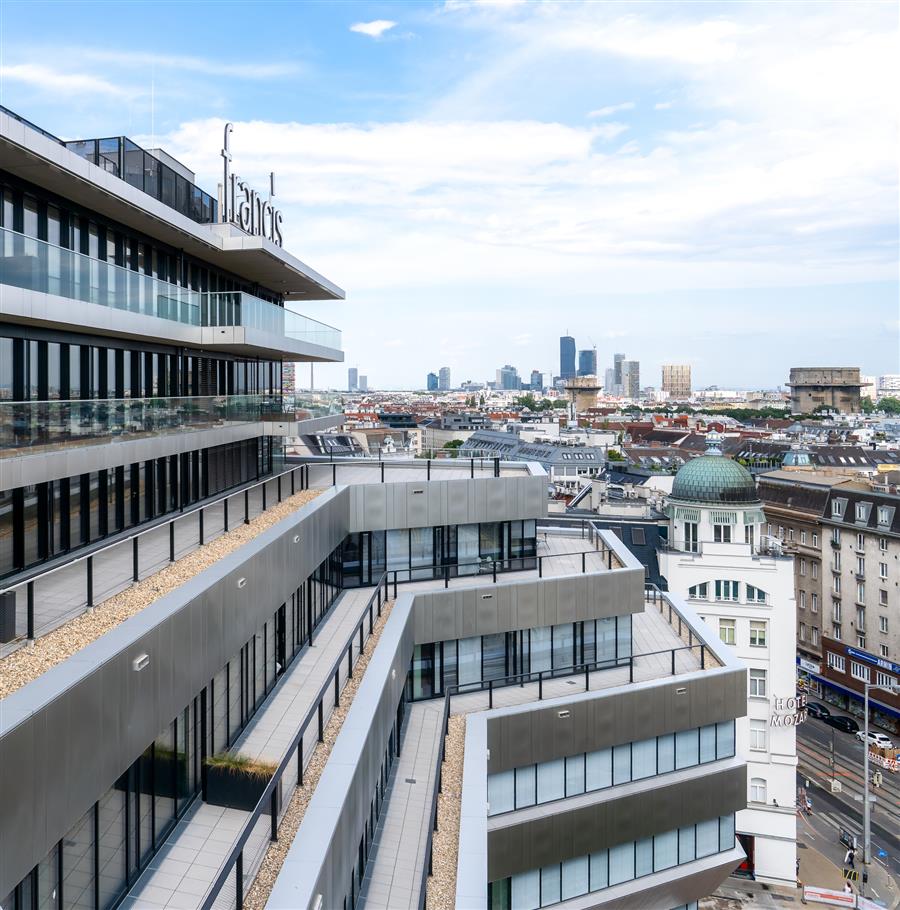 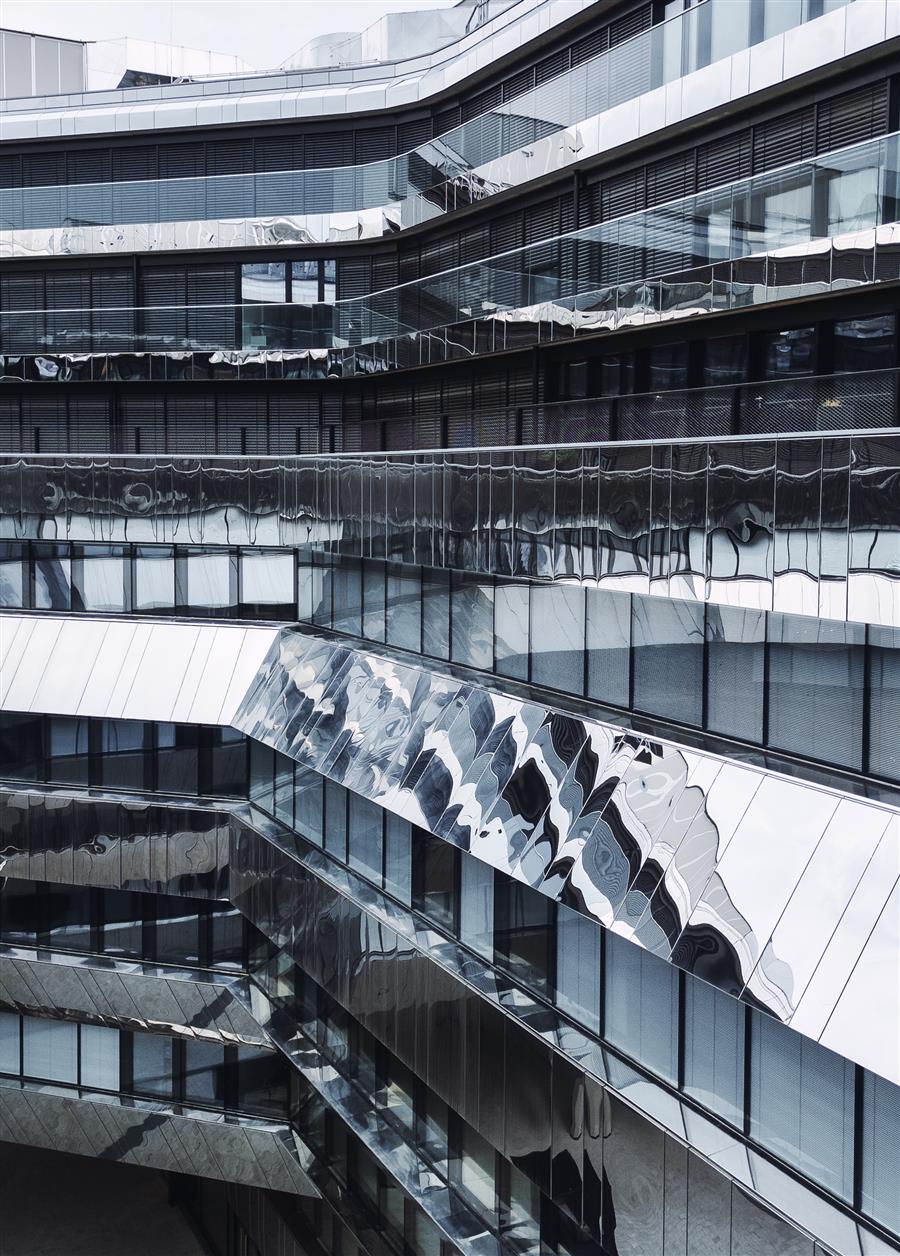 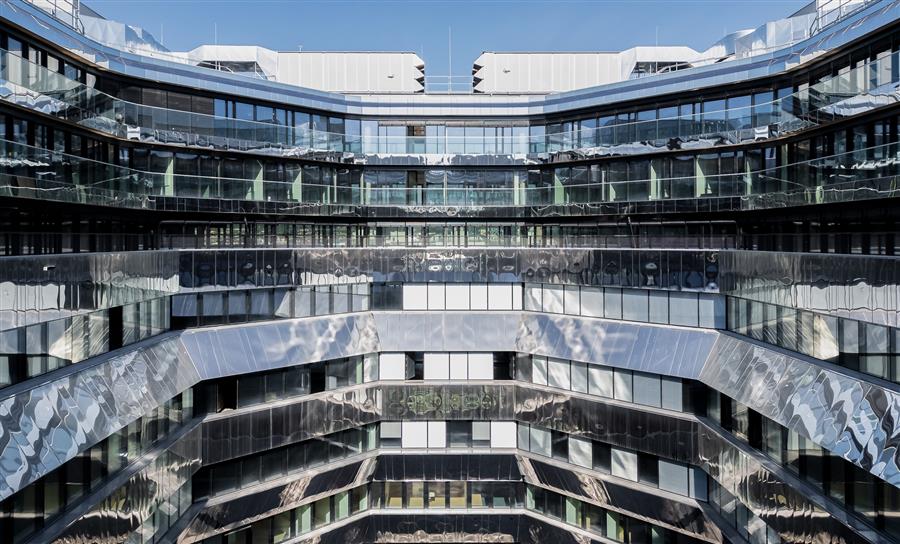
转换或机遇之美-该项目说明了城市发展和环境的潜力,在于现有建筑的改造。特别是在土地和资源稀缺的时代,保存和进一步发展有价值的现有结构是值得的。由于很大一部分所谓的灰色排放与钢和混凝土支撑结构有关,在弗朗西斯的案例中,转换意味着巨大的生态效益:而不是拆除和新建27,595吨二氧化碳,转换的价值是8,970吨二氧化碳-节省67%。根据可持续发展专家,建筑师和土木工程师Werner Sobek的研究结果,节省了122,480吨混凝土和10,944吨钢材,这在原材料短缺和气候变化方面具有开创性。此外,在翻新工程期间,本地居民的生活质素得以维持。由于没有拆除和重建现有设施,估计可避免10,000次货车行程。必要的拆除、拆除和回收工作在建筑内部和地下装卸场进行,最大限度地减少了灰尘、噪音和施工现场的交通。
Conversion or the beauty of chances — The project illustrates the potential for urban development and the environment that lies in the transformation of existing buildings. Particularly in times of land and resource scarcity, the preservation and further development of valuable existing structures is worthwhile. As a large proportion of the so-called grey emissions is bound up in the steel and concrete supporting structure, conversion in the case of Francis means enormous ecological benefits: instead of 27,595 tonnes of CO2 for demolition and new construction, the value for conversion is 8,970 tonnes of CO2 - a saving of 67 percent. According to the results of a study by sustainability expert, architect, and civil engineer Werner Sobek, 122,480 tonnes of concrete and 10,944 tonnes of steel were saved, which is groundbreaking regarding the shortage of raw materials and climate change. In addition, the quality of life of local residents was maintained during the renovation - an estimated 10,000 lorry journeys were avoided by not demolishing and rebuilding the existing. Necessary dismantling work, removal, and recycling were carried out inside the building and in the underground loading yard, minimizing dust, noise, and construction site traffic.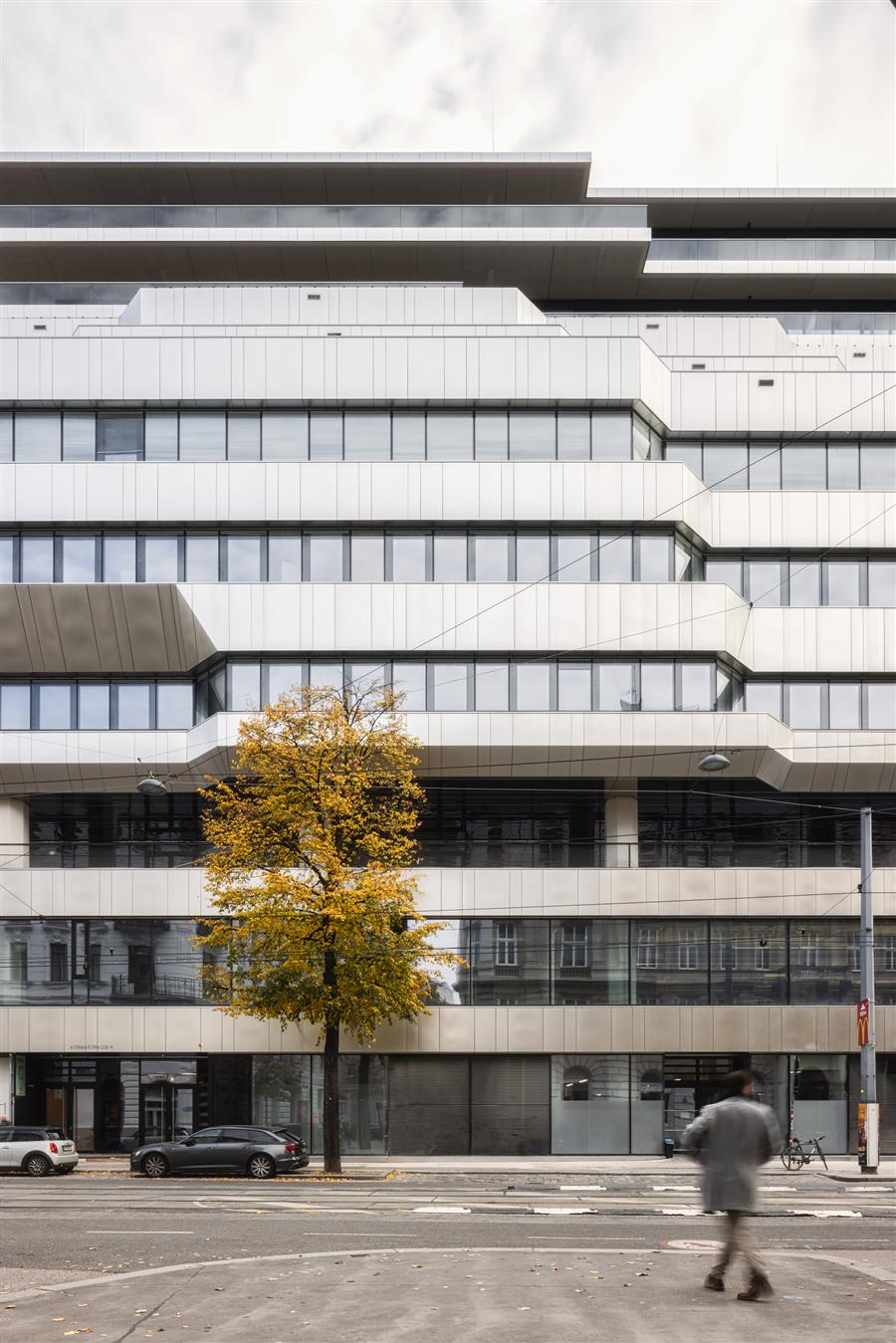 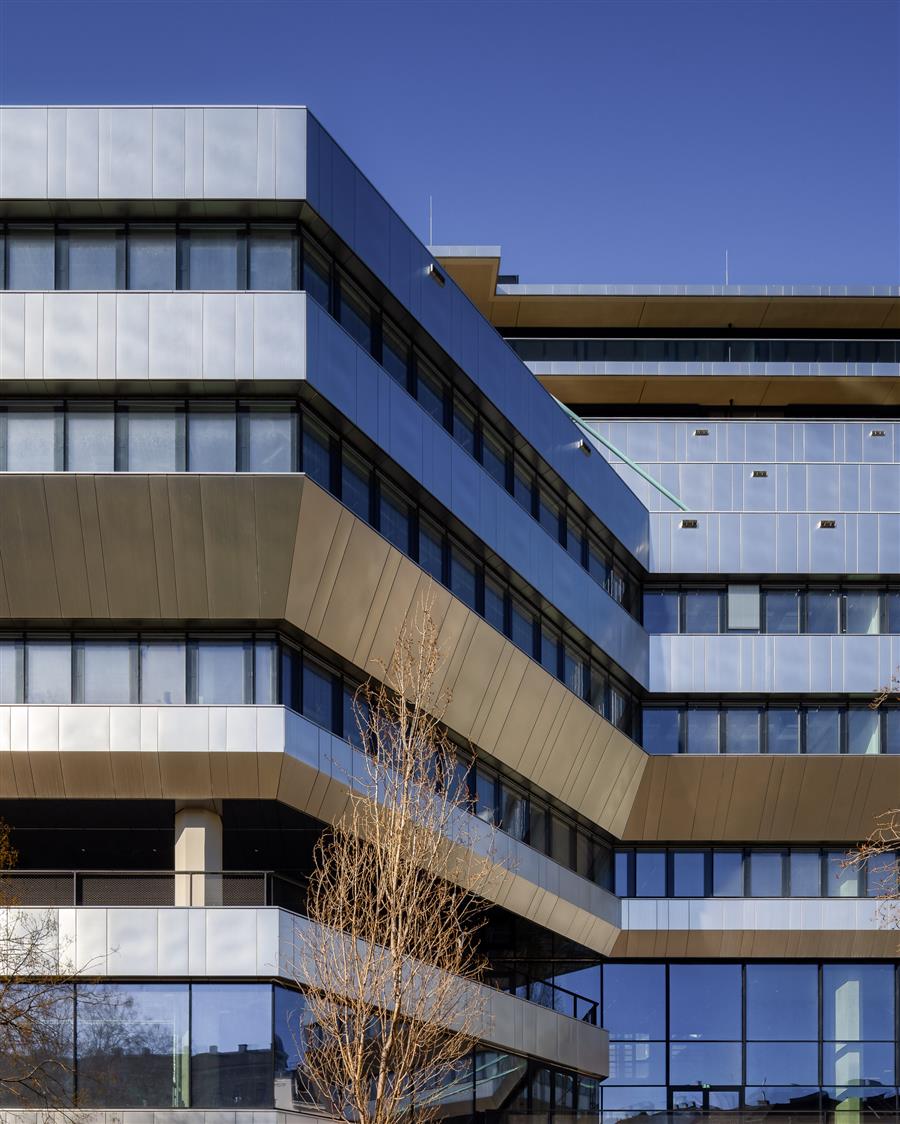 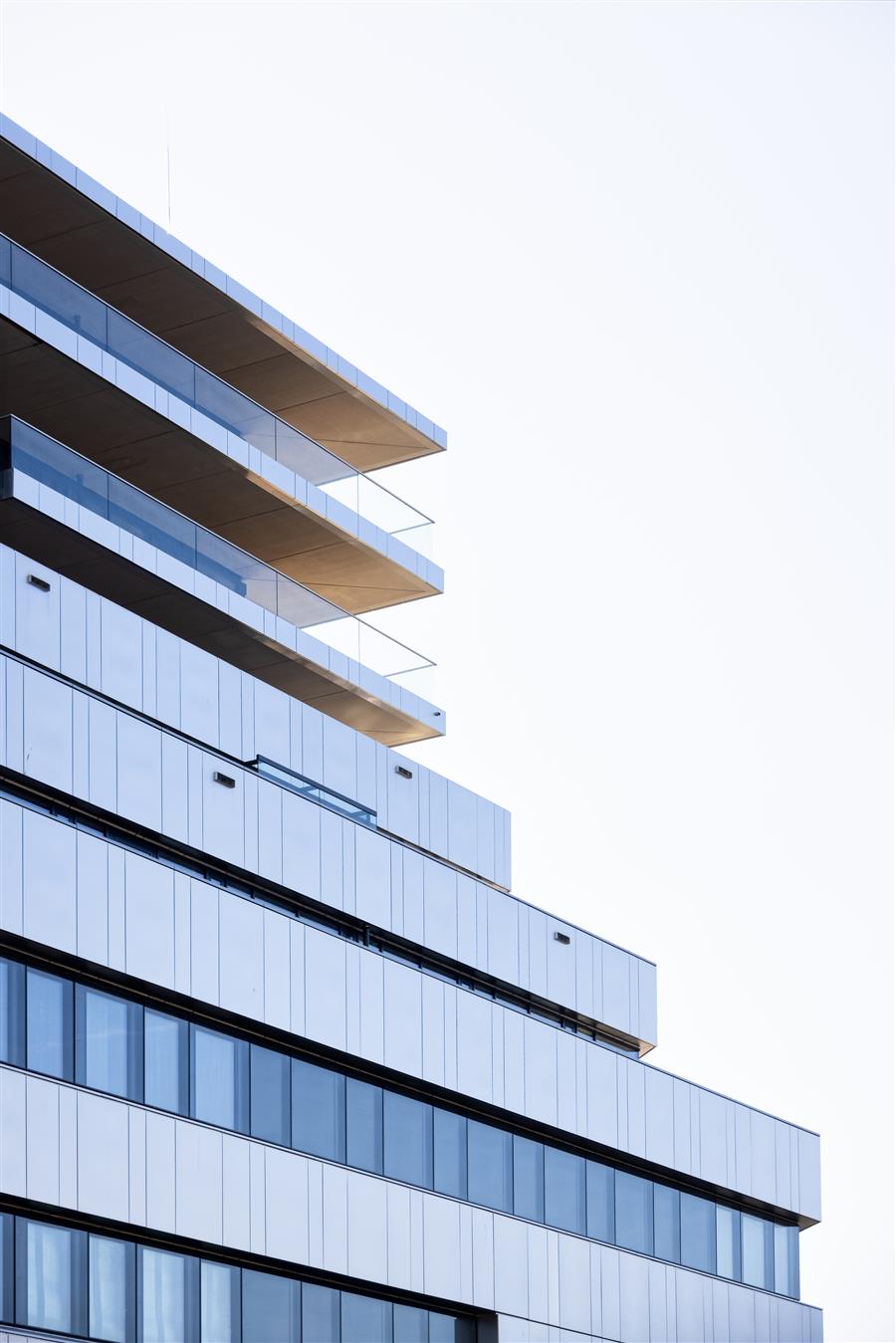
对现有建筑的研究和分析——在进行新设计之前,对20世纪70年代的现有建筑进行了广泛的阅读和理解。DMAA和JWA利用历史规划和文献,分析并内化了原建筑师Karl Schwanzer的最初想法,在拆除和改造之间做出了根本性的决定。在BIM(建筑信息模型)的帮助下,创建了现有建筑的数字孪生体,从而可以对混凝土立方体和可能的适应性后果进行全面研究。现有建筑具有经济优化的钢筋混凝土结构的潜力,这在20世纪70年代是例外的,在静力、噪音、防火以及建筑物理方面的适用性方面进行了彻底的检查。作为奥地利银行总部,现有建筑的特点是镜面立面和一个引人注目的、宽敞的、但几乎未使用的楼梯。镜面立面强调了建筑的封闭性,而外部楼梯的巨大姿态主导了Julius-Tandler-Platz区域。改造允许这些过时的风格元素被移除。
Study and analysis of the existing building — The new design was preceded by an extensive reading and understanding of the existing building from the 1970s. Using historical plans and documents, DMAA and JWA analyzed and internalized the initial ideas of the 900 architect, Karl Schwanzer to make a fundamental decision between demolition and conversion. With the help of BIM (Building Information Modeling), a digital twin of the existing building was created, which enabled comprehensive studies of the concrete cubature and the consequences of possible adaptations. The potential of the existing building with its economically optimized reinforced concrete structure, which was exceptional for the 1970s, was thoroughly examined in terms of statics, noise, and fire protection, as well as suitability in terms of building physics. Characteristics of the existing building in its function as the headquarters of Bank Austria were the mirrored façade and a striking, expansive, but almost unused staircase. The mirrored façade emphasized the hermetic nature of the building, while the monumental gesture of the external staircase dominated the area of Julius-Tandler-Platz. The remodeling allowed these outdated stylistic elements to be removed.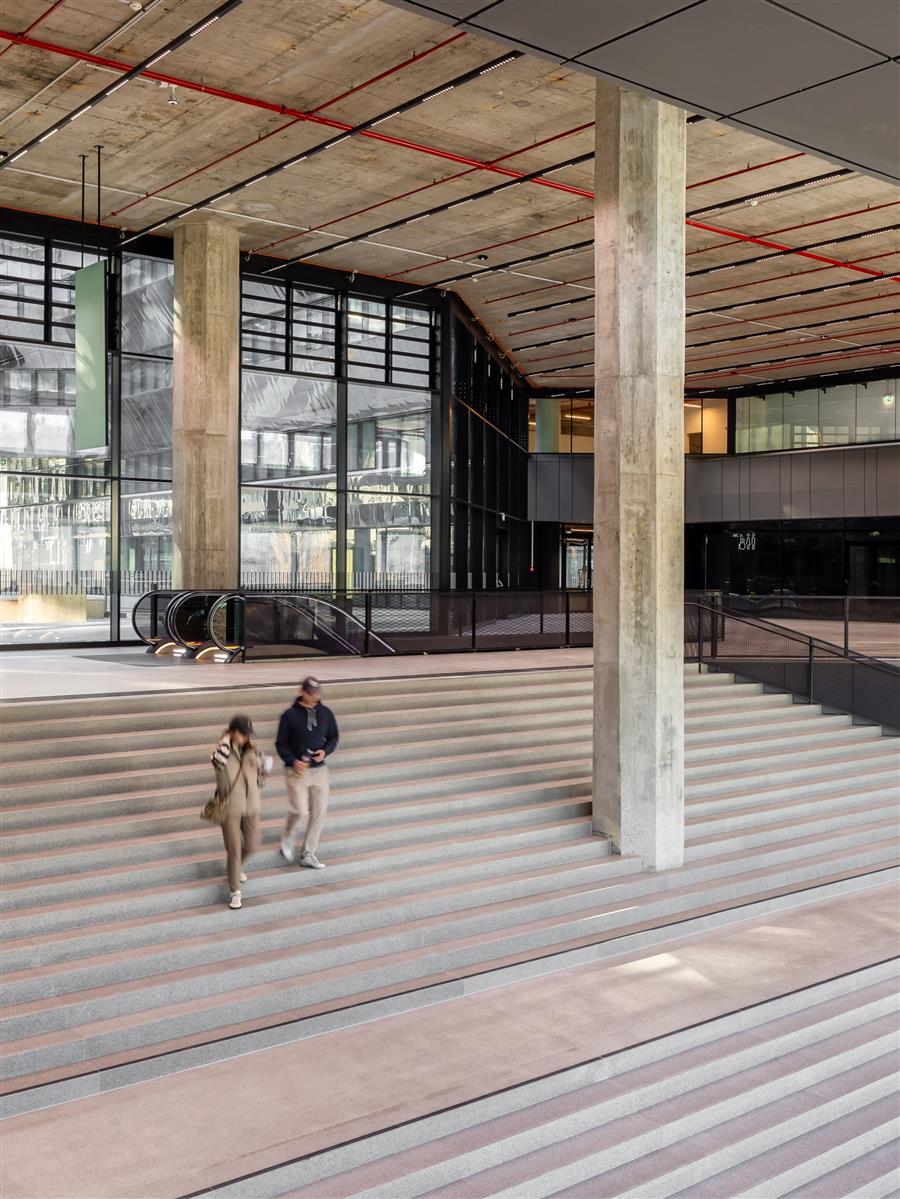 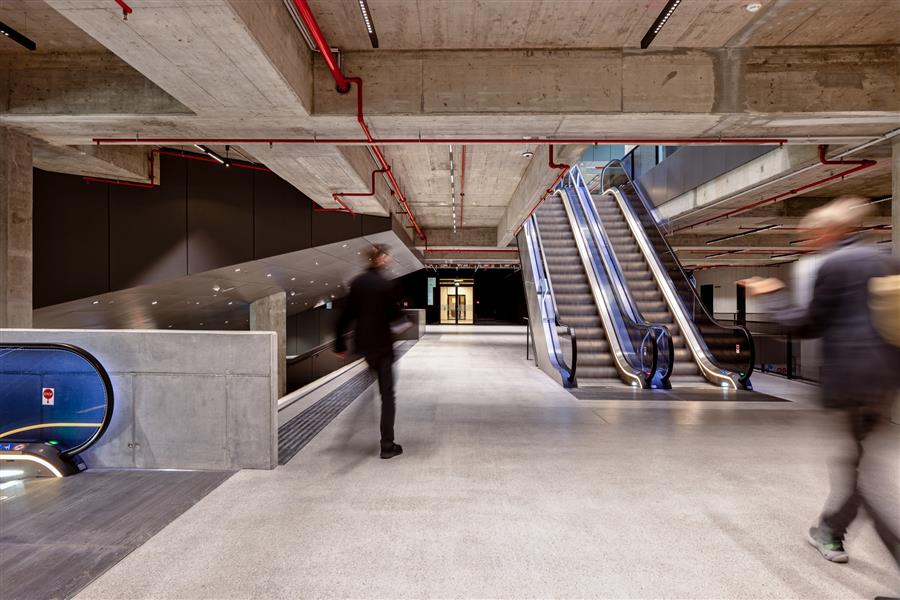 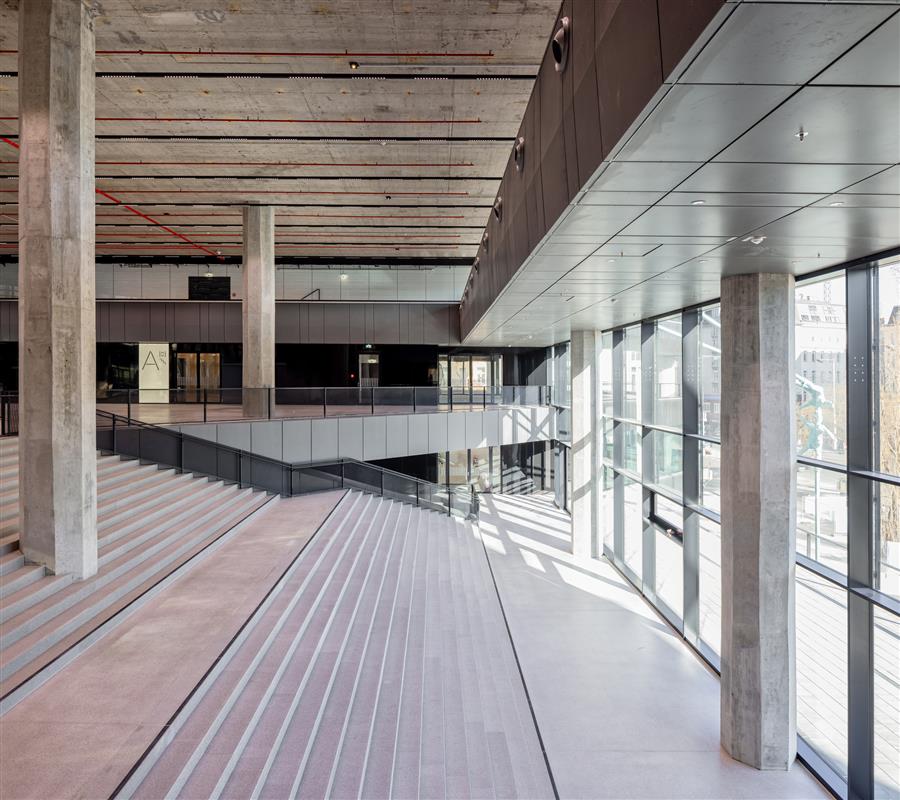
新空间的发展——规划过程的主要焦点之一是为社区创造一个新的开放空间:新的城市空间、半公共空间、无障碍通道和开放空间的餐厅将被创造出来。办公楼的尺寸和实质被保留,但新的开放空间被创造出来,使朱利叶斯-坦德勒广场以新的外观和增加的可达性更具吸引力。新广场位于街道地面9米以上,位于铁路隧道轨道上方,内部庭院连接着Spittelauer广场、Lichtentaler广场和julius - tandler广场的宝贵开放空间。项目开发的决定性前提是行人的渗透性,对Julius-Tandler-Platz的开放,最广泛的用途组合,城市核心区的再密集化,以及与城市空间的和谐融合。
Development of the new — One of the main focuses of the planning process was to create a new opening to the neighborhood: new urban places to linger, semi-public spaces, barrier-free access, and restaurants with open spaces were to be created. The dimensions and substance of the office building were retained, but new open spaces were created, making Julius-Tandler-Platz much more attractive with a new look and increased accessibility. Situated nine meters above street level and above the tracks of the railway tunnel, the new plaza level in the inner courtyard links the valuable open spaces of Spittelauer Platz, Lichtentaler Platz, and Julius-Tandler-Platz. Decisive premises of the project development were the pedestrian permeability, the opening to Julius-Tandler-Platz, the broadest possible mix of uses, the redensification of an urban core zone, and the harmonious integration into the urban space.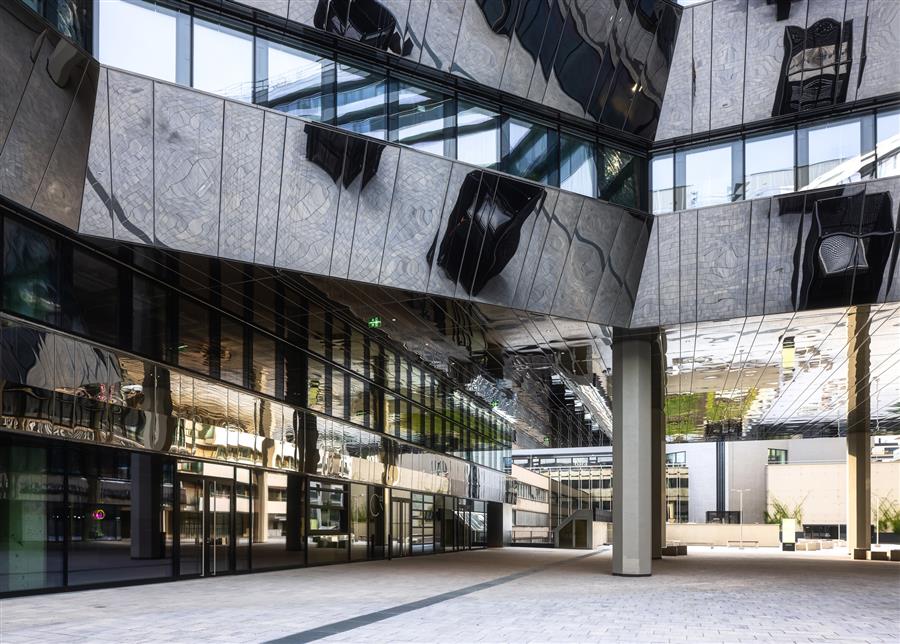 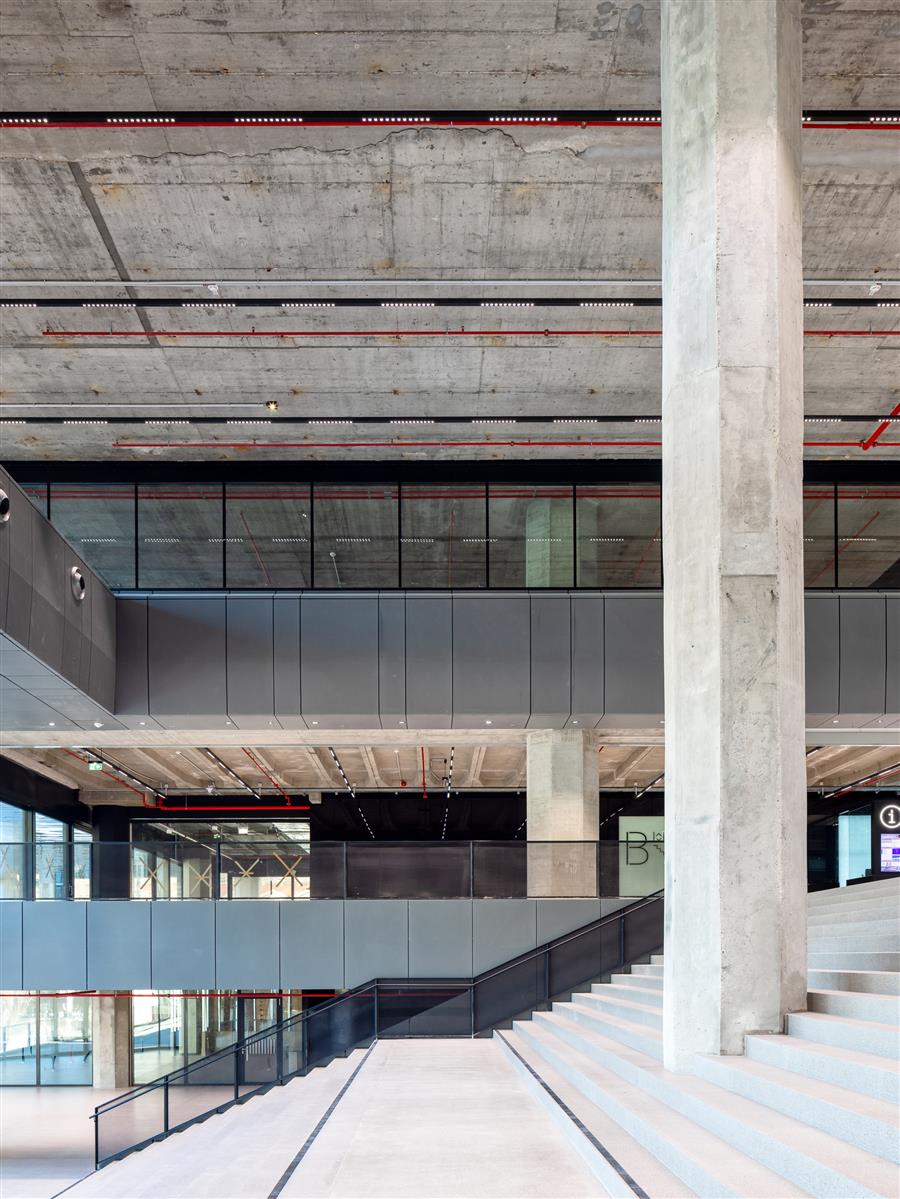 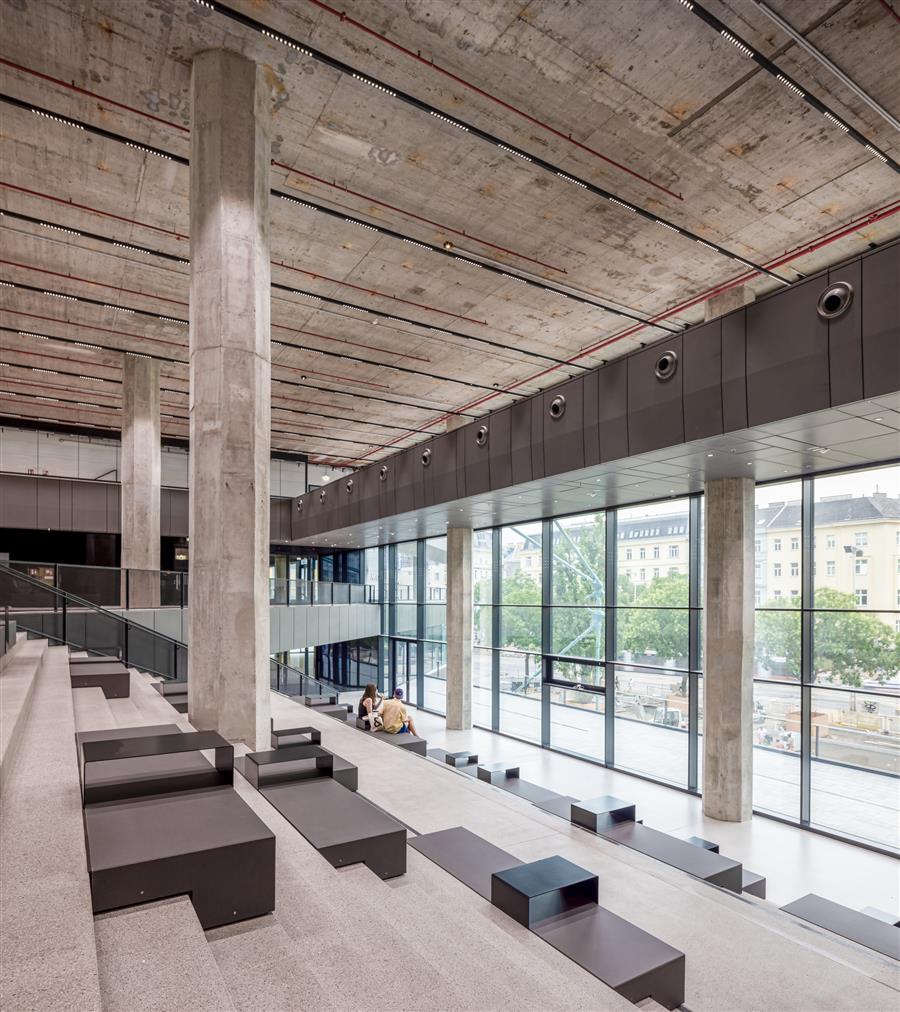
建筑物的正面从镜像中解放出来。立面的新不锈钢包层具有无眩光和光滑的哑光外观,这得益于其精美的浮雕,而露台为餐厅和办公室创造了额外的开放空间,并与建筑之前的隔离设计相反。另一个规划重点是设计一个生动的基地区。基地的大开口实现了与Julius-Tandler-Platz的空间关系,使车站大厅更具吸引力,并与中央广场层建立了诱人的联系。在建筑的北后方,为了回归到Karl Schwanzer最初的立方体孤立建筑的想法,从20世纪70年代开始连接办公大楼和车库的结构被拆除。
The facade of the building was freed from its mirroring. The new stainless steel cladding of the façade has a glare-free and silky matt appearance thanks to its fine embossing, while the terraces create additional open spaces for restaurants and offices and a counter-design to the building's previous seclusion. Another planning focus was on the design of a vivid base zone. The extensive opening of the base achieves the desired spatial relationship to Julius-Tandler-Platz, makes the station hall more attractive, and creates an inviting connection to the central plaza level. At the northern rear of the building, a connecting structure from the 1970s, between the office complex and the garage, was removed in order to return to Karl Schwanzer's 900 idea of a cubic solitary building.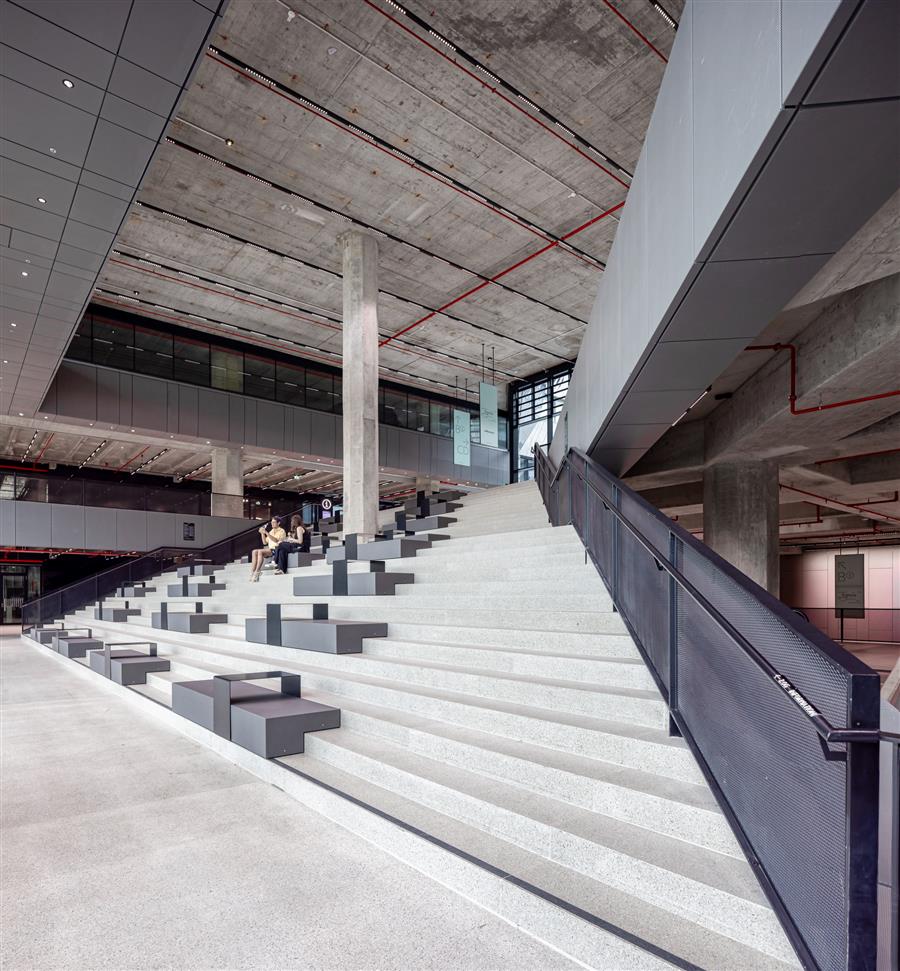 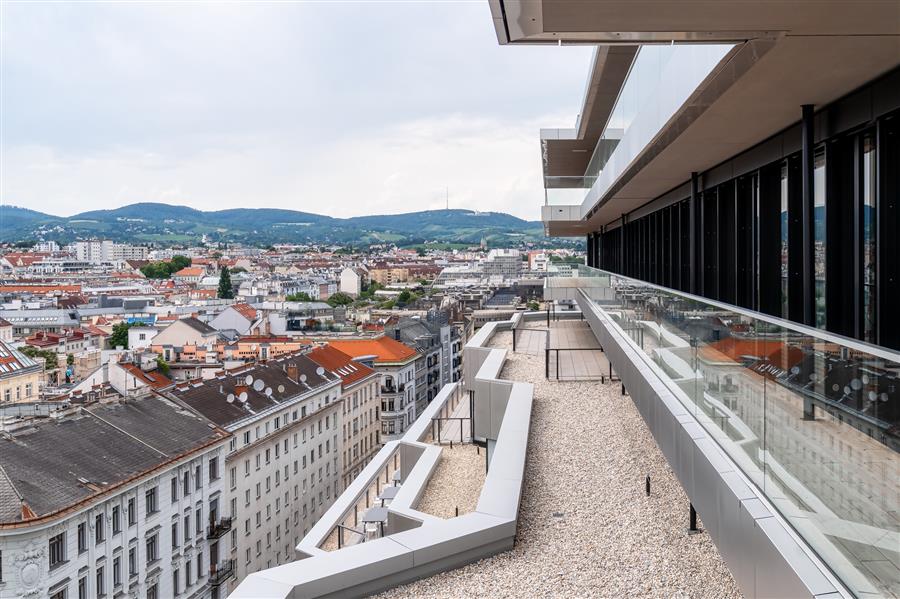
重新致密化是通过一个两层的扩展来实现的,这个扩展与建筑的轮廓相一致,因此几乎不知不觉地融入了现有结构的外观。八层办公大楼拥有宽敞的户外区域,提供约40,000平方米的可用空间,可以俯瞰邻近的宫殿,列支敦士登公园,并穿过市中心到圣斯蒂芬大教堂。与本地和长途交通网络的最佳连接是前瞻性的,所有主要的公共交通工具都可以在几分钟内到达。与附近多瑙河沿岸自行车道的连接也同样理想。弗朗西斯一楼有安全的自行车停车位。建筑的智能化在供应和处理系统中也很明显:这是通过地下装载场组织的,从而将地上的运输流量降至最低。
The redensification was achieved by means of a two-story extension, which was staggered back in line with the contours of the building and thus blends almost imperceptibly into the physiognomy of the existing structure. The eight office stories with their spacious outdoor areas offer around 40,000 m² of usable space, looking out over the neighboring palaces, Liechtenstein Park, and across the city centre to St. Stephen's Cathedral. The optimal connection to the local and long-distance transport network, with all major means of public transport accessible within a few minutes, is forward-looking. The connection to the nearby bike routes along the Danube Canal is just as ideal. Secure bicycle parking spaces are available on the first floor of Francis. The intelligence of the building is also evident in the supply and disposal system: this is organized via the underground loading yard, thus keeping above-ground delivery traffic to a minimum.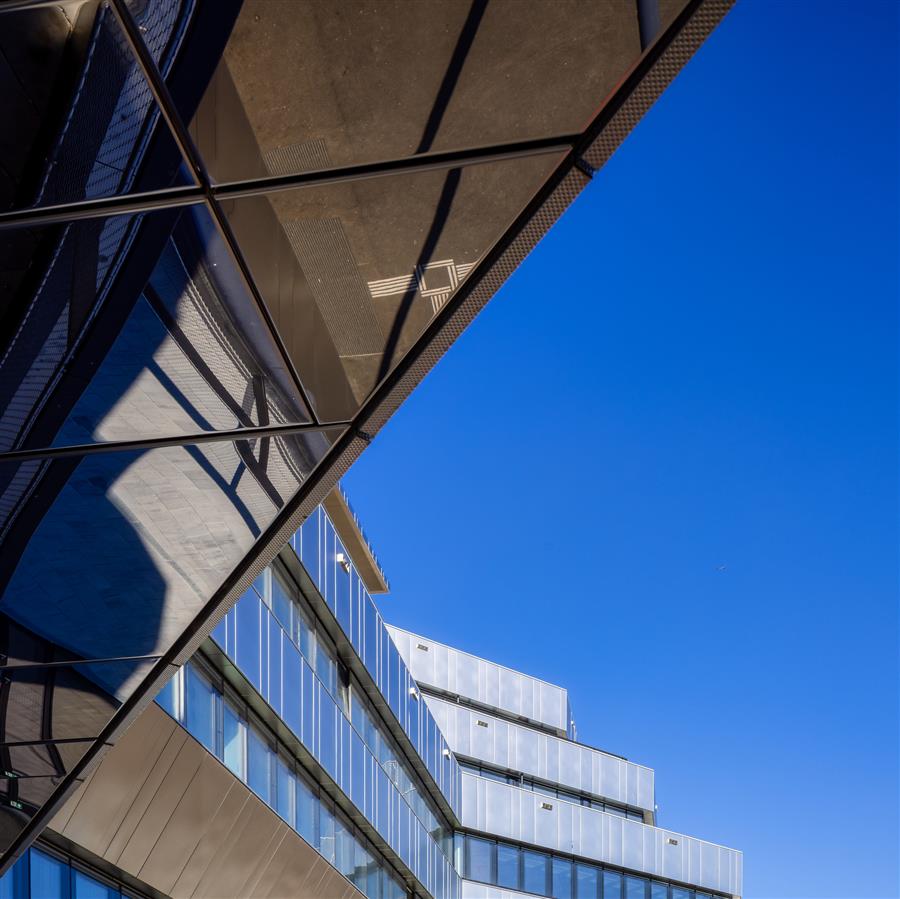
改造项目得益于现有建筑骨架结构的智能经济。10米的柱间距和可拆卸的预制天花板为转换设计提供了最大的灵活性。高达3.5米的迷人房间高度,在新建筑中很少实现,提供了风格和明亮。全面适应当今的安全标准、安全技术、建筑物理、静力学和抗震性,并通过建筑材料的高生态标准获得ÖGNI(奥地利可持续建筑委员会/ Österreichische Gesellschaft f r Nachhaltige Immobilienwirtschaft)的金牌认证,强调了该项目作为未来城市转型典范的重要性。因此,弗朗西斯转换项目展示了现有建筑结构的智能利用,并在生态可持续性和城市一体化方面树立了新的标准。
The conversion project benefits from the intelligent economy of the existing building's skeleton structure. Column spacing of 10 meters and the removable prefabricated ceiling allow the greatest possible flexibility for the design of the conversion. Attractive room heights of up to 3.5 meters, which are rarely realized in new buildings, provide flair and brightness. The comprehensive adaptation to today's safety standards, safety technology, building physics, statics, and earthquake resistance, as well as the achievement of gold certification from the ÖGNI (Austrian Sustainable Building Council/ Österreichische Gesellschaft für Nachhaltige Immobilienwirtschaft) through high ecological standards for building material, underline the importance of this project as a model for future urban transformations. The Francis conversion project thus demonstrates the intelligent utilization of existing building structures and sets new standards in terms of ecological sustainability and urban integration.
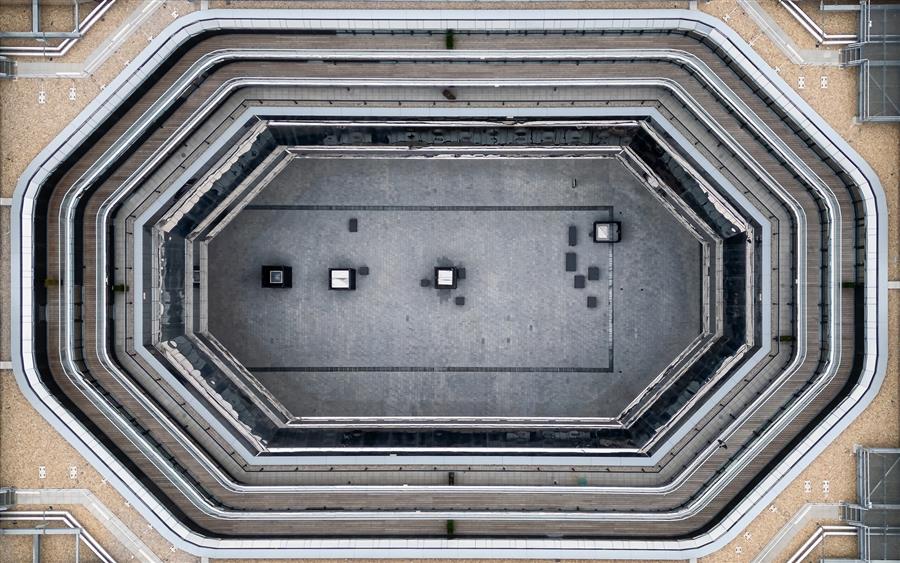 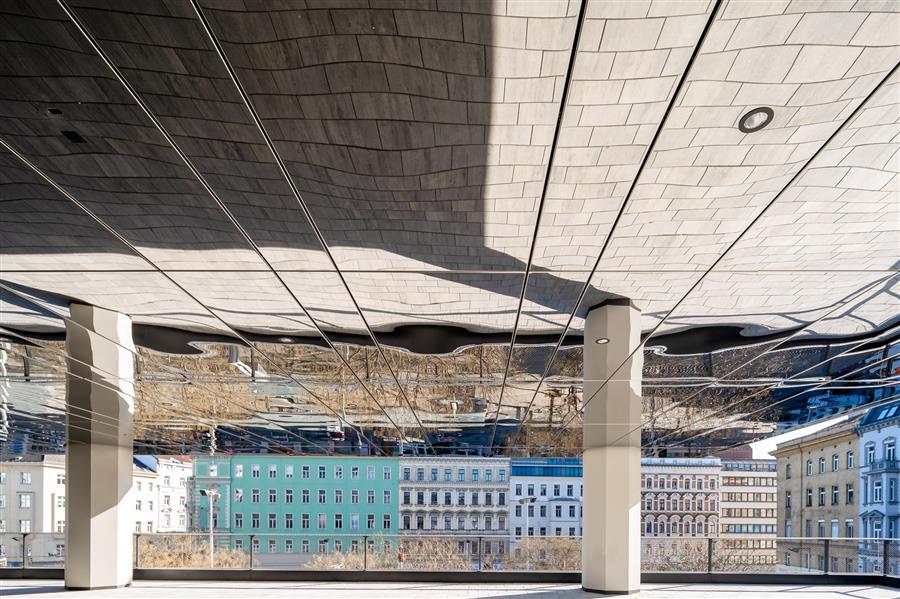
项目图纸▲平面图 ▲平面图 ▲示意图 ▲分析图 ▲示意图
沙特阿拉伯正于利雅得西部的基迪亚市,兴建该国迄今规模最大的国家网球中心。项目落成后,不仅将承办国际顶级赛事,更旨在本土培育职业选手、推广全民网球,成为王国体育版图上的又一战略支点。
整座综合体坐落在图瓦伊克山脉的天然地貌之中,设计团队以层叠绿植立面和景观导向的建筑语言,将硬朗的沙漠环境与流畅的现代设施相融。
中心共设30片球场,其中28片为硬地,两片为红土,规模在中东地区首屈一指。所有场地均符合ATP、WTA及国际网联的办赛标准,既可承接精英对抗,也能满足青少年训练与社区活动之需。
核心场馆是一座拥有可伸缩屋顶的15000座中央球场,无论酷暑或风沙,赛事皆可如期举行。与之配套的还包括8000座的多功能馆(同样配有活动顶盖)、5000座的一号球场及2000座的二号球场,整个园区可同时容纳约33000名观众。这些场馆不独为网球服务,日后亦将引入音乐会、文化展演和其他体育项目,变身全年无休的复合式娱乐空间。
训练与保障体系同样完备:6个室内球场、14个练习场、高水平体能中心、运动员康复区、水疗理疗室、健康管理站及专属媒体区,构成一条从青苗培养到职业竞技的完整链条。
项目由国际知名建筑事务所Populous操刀,其过往在大型体育场设计上的积累,保证了场馆兼具国际赛事规格与灵活运营能力。国际网联及ATP方面亦对此给予肯定,认为该设施将有效助推网球运动在中东地区的纵深发展。
近年来,沙特持续加码体育投资,国家网球中心是其中一环,将与基迪亚城内的娱乐 城、酒店及高尔夫球场联动,把荒漠转变为集体育、休闲、旅游于一体的新兴地标。这座“沙漠中的网球绿洲”建成后,将常年承办职业赛,并为本土人才提供直通世界舞台的通道,其雄心与规模,足令国际网坛侧目。
|


